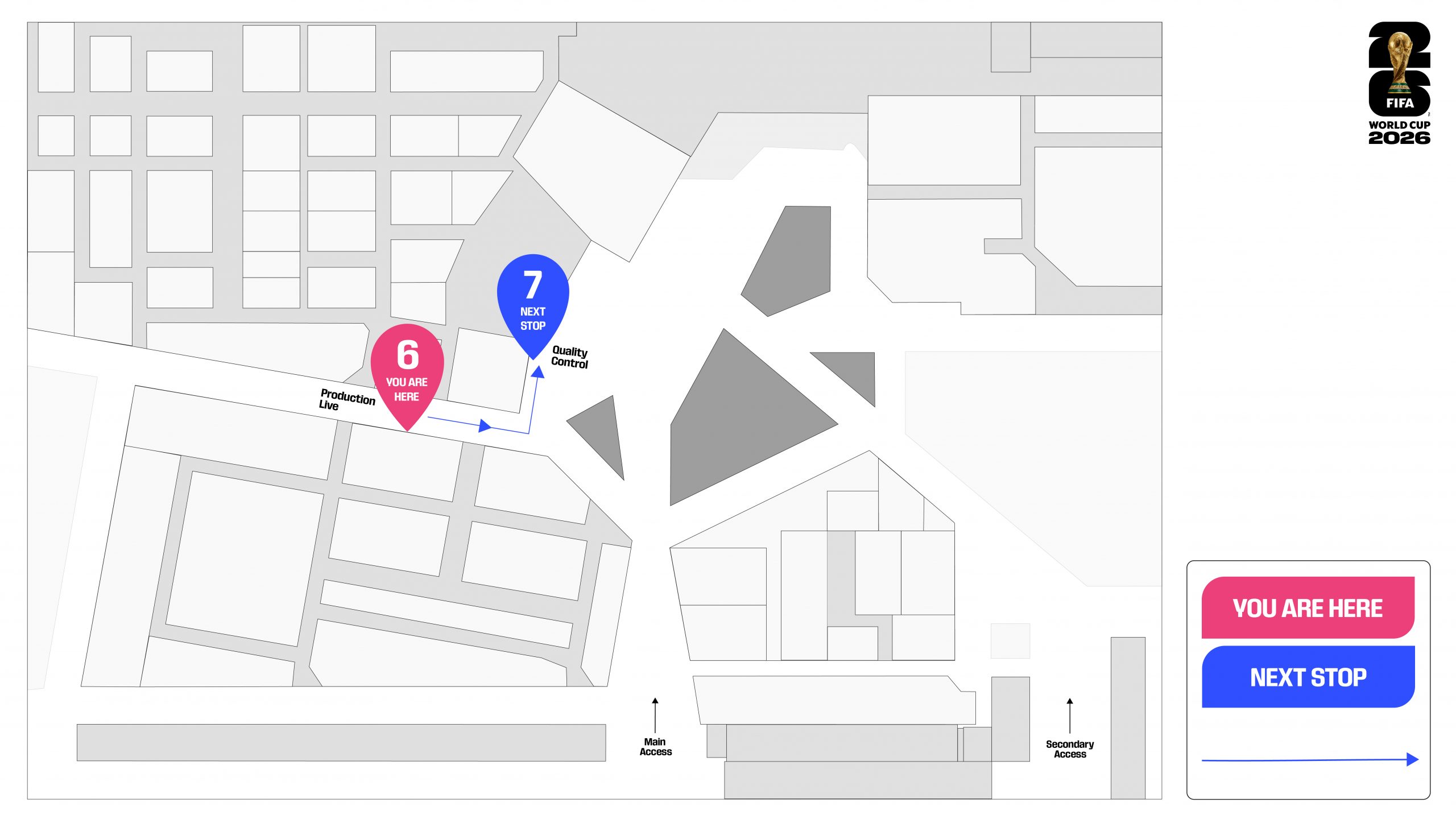
Stop 6: Live Production
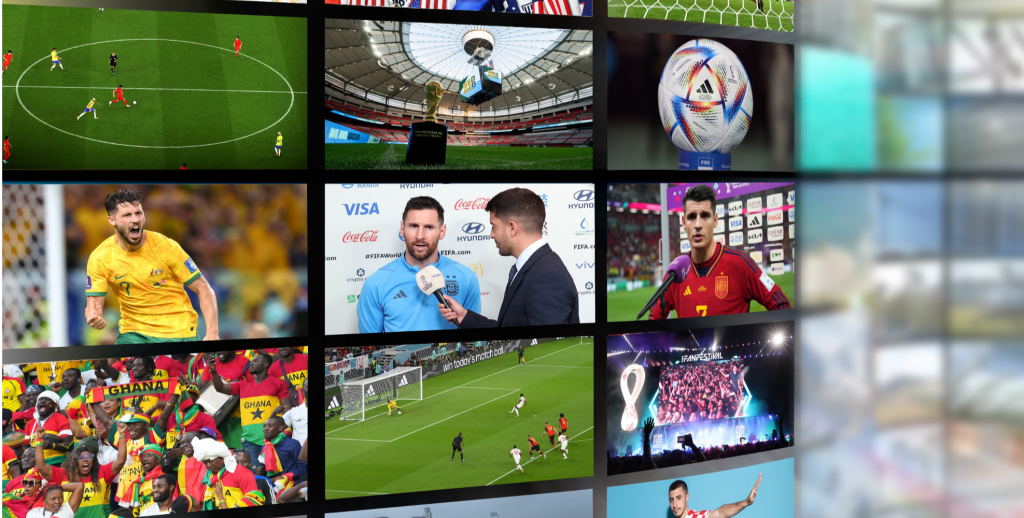
With 104 matches played across 16 venues and three countries, the expansion in scale of the FIFA World Cup 2026™, compared to previous editions, calls for a precise and thorough production plan for the live action at the venues, ensuring continuity and consistency throughout the tournament. FIFA has optimized its broadcast operations by investing in the latest technological innovations and refining its multilateral offer to achieve a groundbreaking coverage of the action and emotion of the competition.
A total of 16 production teams have been assigned a single venue each for the duration of the Group Stage, allowing each team to be on site for any non-Match Day venue-based activities, such as Match Day-1 press conferences and ceremony rehearsals. Given the geographical scale of the competition, having one team per venue ensures risk mitigation.
The 16 directors on the FIFA World Cup™ have been selected from different markets, ensuring diversity in the coverage; they are from French-, English-, German-, and Spanish-speaking markets. 16 commentary teams, made of a commentator and co-commentator each, cover commentary for the World Feed.
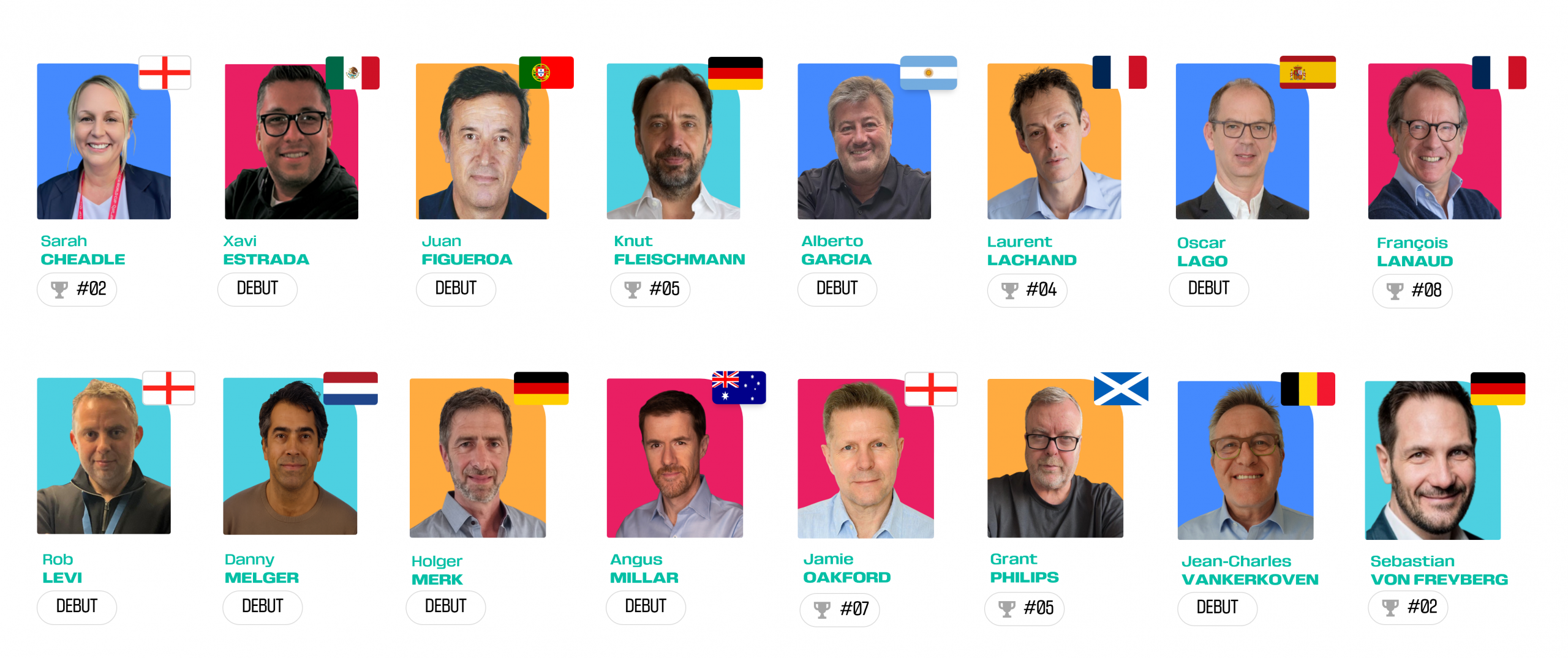
For the first time since 2010, the model used to capture live content at the 16 venues is a mixed-one, with a split between OB Vans or fly-pack solutions depending on the venue.
Camera Plans
The live match production plan of the FIFA World Cup 2026™ offers a comprehensive and high standard coverage of the matches and match-related activities.
Each match of the competition is covered with a standard camera plan, with up to 45 cameras (for Group Stage) or 50 cameras (Knock-Out Stage), located in the stadium and by the field of play to provide viewers with the best possible angles.
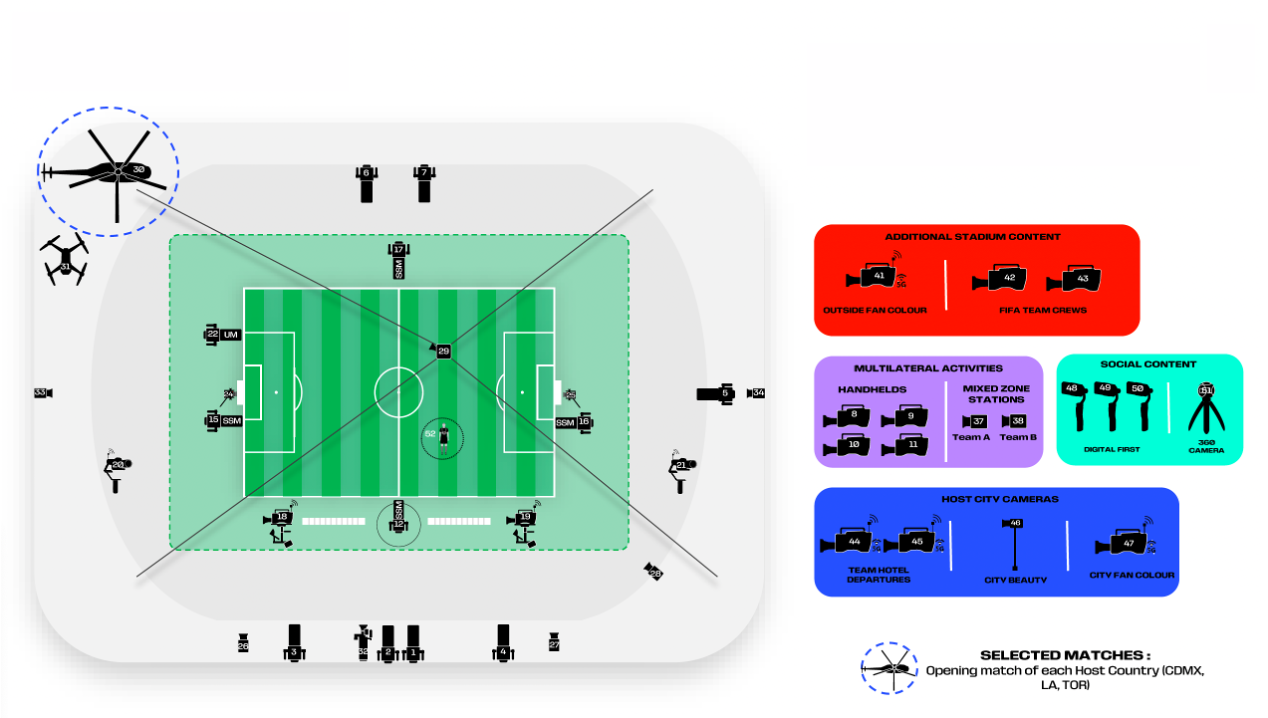
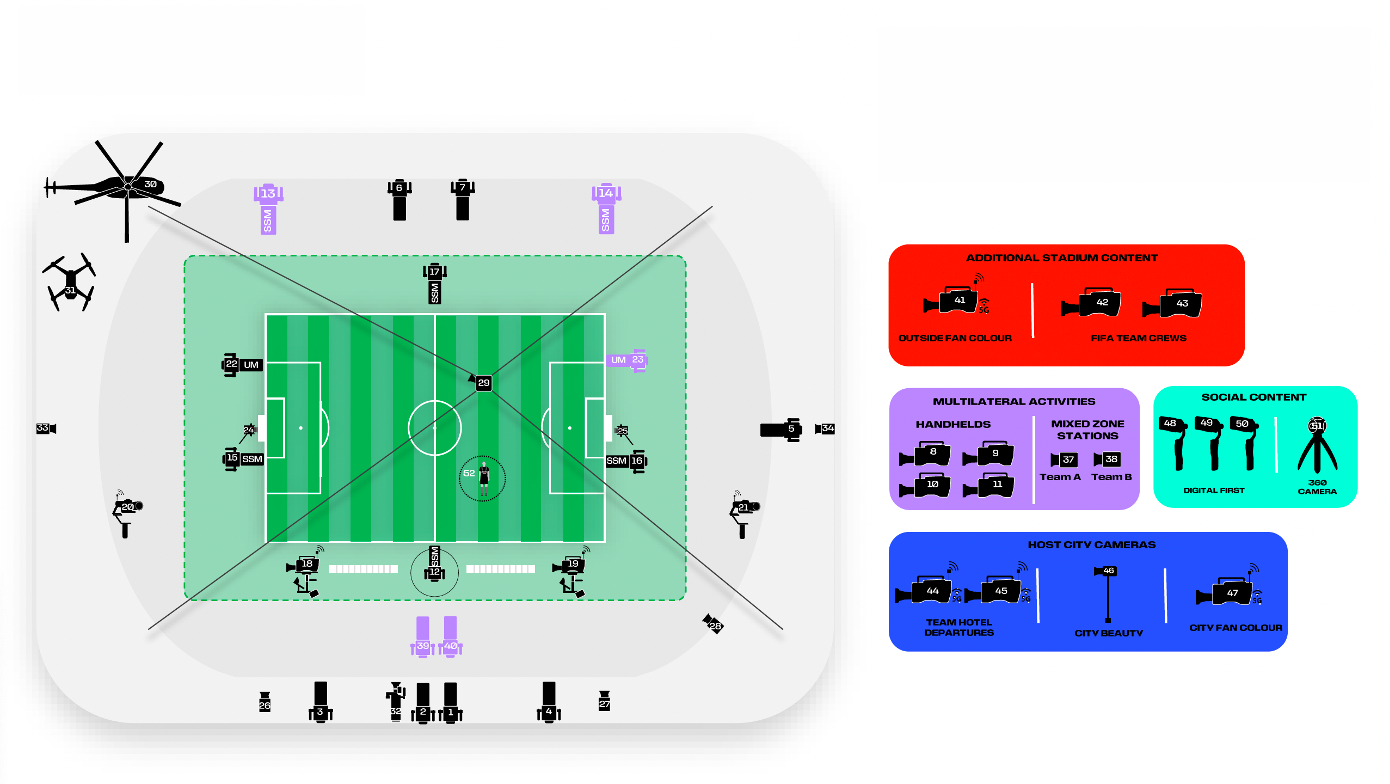
Special cameras such as Super Slow Motion (SSM) and Ultra Motion (UM) provide an immersive element to the coverage, allowing focus on key players or special moments of action and a more tailored narrative.
Several Radio Frequency (RF) handheld cameras offer roaming flexibility to capture activities in and around the stadium, such as fan coverage, team arrivals, and interviews. Outside Stadium Coverage is a key deliverable of the live coverage, reflecting interest from fans and Media Partners in pre-match content.
New for 2026, the addition of a Referee Camera provides an original immersive angle for fans to have a POV perspective on what’s happening on the pitch. Mainly used for replays, this camera, tested during the FIFA Club World CupTM in 2025, is used for the first time ever at a FIFA World CupTM.
Multi-Feeds
At the core of live content distribution, the multi-feed concept allows FIFA to provide an extensive range of match and additional content to its broadcasters. For the FIFA World Cup 2026™, the multi-feed concept has been streamlined to allow Media Partners to access content easily and provider a greater level of customization.
Seven different feeds are offered to Media Partners, as well as 10 isolated feeds. The three main feeds are the Extended Stadium Feed (ESF), the Clean Stadium Feed (CIF) and the World Feed (WF), which contain pre-, in- and post-match features covering the main action on and off the pitch.
These feeds follow a set running order to allow broadcasters to know precisely when they can insert their unilateral features.
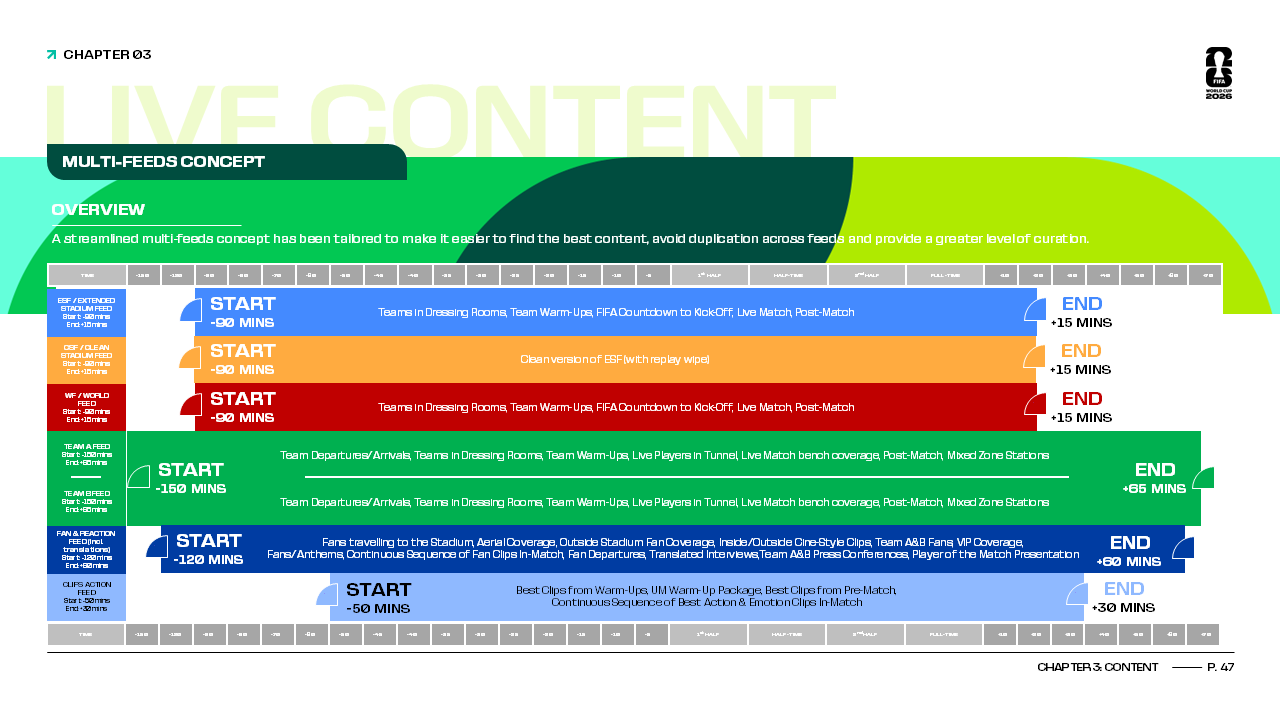
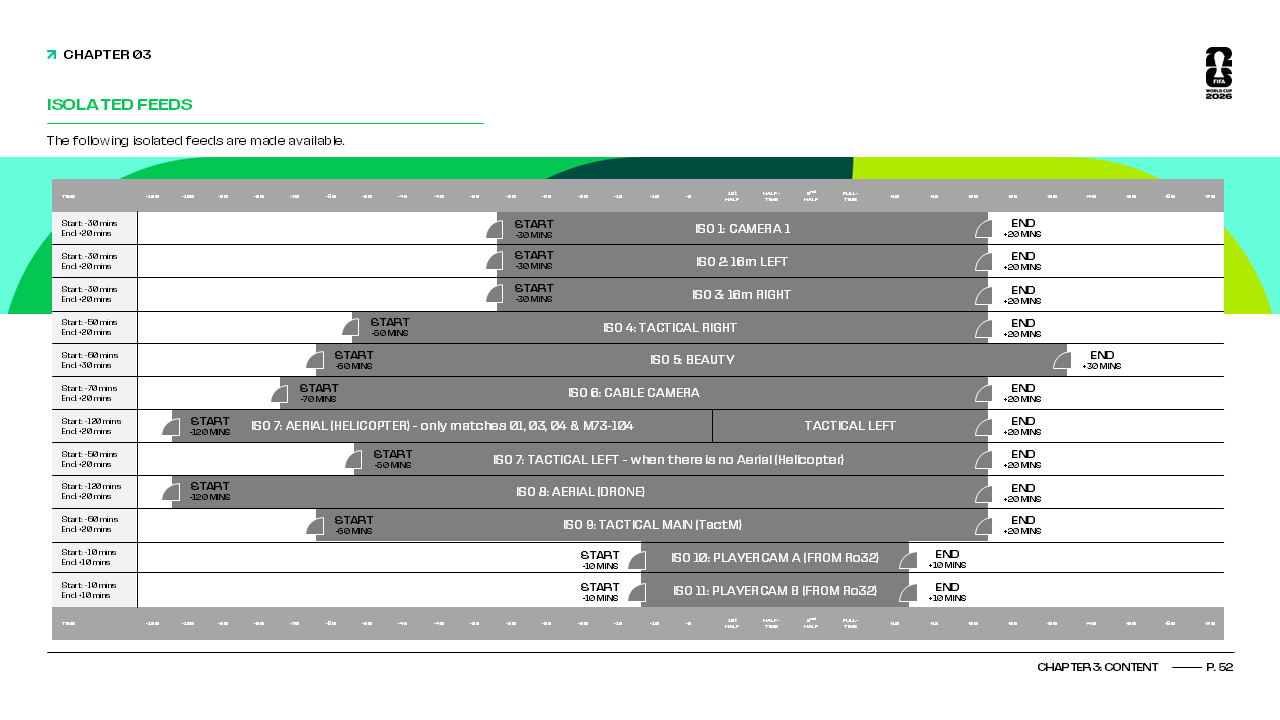
Depending on the level of personalization desired by each Media Partner, FIFA also offers the option to receive the following additional feeds:
- Team A & B Feeds
- Fan & Reaction Feed
- Clips Action Feed
- Host City Beauty Camera Feeds
Each of these feeds contains different elements and focuses on a particular aspect, angle, or personality of the game, ensuring broadcasters can customize their coverage to fit their narrative as desired.
The ESF/CSF are produced in UHD-HDR 2160p/59.94 BT.2100. All other feeds and ISOs are produced in 3G-HDR 1080p/59.94 BT.2100, with all feeds being are made available to the Media Partners in 3G-HDR 1080p/59.94 BT.2100, and in 3G-SDR 1080p/59.94 REC.709. Only the ESF/CSF are made available in UHD-HDR 2160p/59.94 BT.2100.
Centralized Operations
For the FIFA World Cup 2026™, FIFA has optimized its broadcast operations by leveraging the latest technological innovations to refining its multilateral coverage setup. Centralized operations bring additional consistency to the coverage, reinforcing the visual identity of the competition. They also allow FIFA to limit its on-site presence, participating to lowering the environmental impact of its broadcast operations.
Replays
For the first time at a FIFA World Cup™, replay operations are centralized at the IBC instead of being located at the venue. This allows for the optimization of compound space at the stadium and reduces the carbon footprint of the whole event.
Seven teams of replay operators work with the 16 directors, pooled by languages, ensuring the match venue and IBC teams work in their native language. This centralized set-up ensures that the best operators in the world work across more matches, bringing increased consistency to the coverage.
All replay server outputs are sent back to the Stadium production kits to be made available on the Director’s vision mixer desk and monitor wall. Each stadium also hosts its own limited standalone emergency replay system, ensuring full redundancy and operating as a risk mitigation set-up.
Shading
Shading for the competition is also centralized at the IBC. Six shading galleries are set up at the IBC, each connected to the relevant active stadium. Each gallery hosts up to nine shader positions with necessary monitoring gear and camera remote control panels to allow the shaders to control the cameras located in the stadium facilities.
The centralisation of shading sees an experienced team working across all games, ensuring sustained consistency and better coordination with the IBC-based HDR supervisor. It also guarantees control over the colors and picture quality across all matches, ensuring a coherent and recognizable visual identity is maintained throughout the 16 competition venues.
As a mitigation solution, shaders located at the stadium can be used as emergency shaders, should a contribution issue arise.
Audio Production
The microphone plan for the competition offers a comprehensive capture of the stadium atmosphere and pitch action.
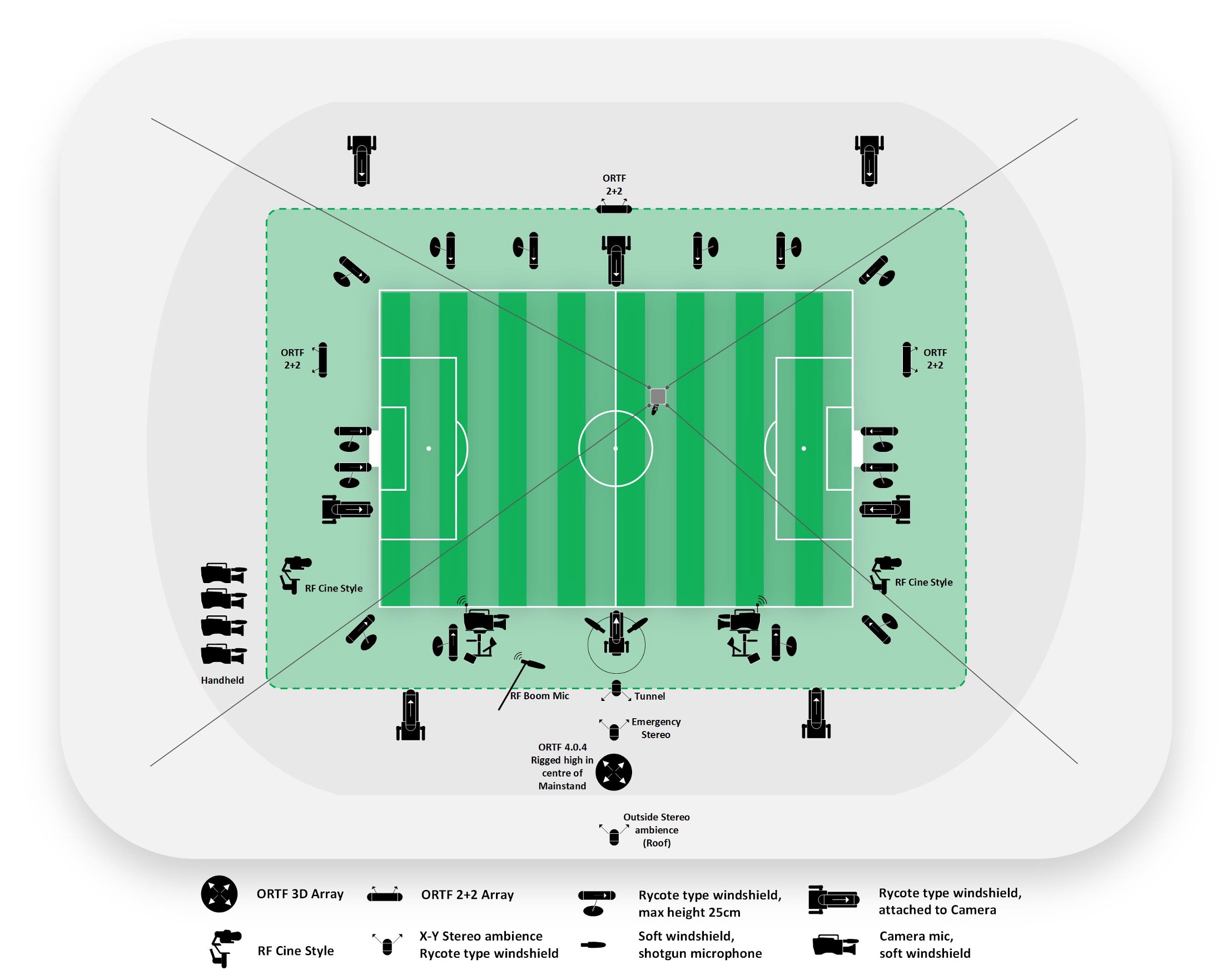
For consistency reasons, audio mixes are produced from purpose designed centralized audio suites at the IBC. The IBC audio suites get all audio sources from each match stadium daily through the Broadcast Contribution Network and then generate:
- Immersive Audio
- Multi-Channel International Sound (MCIS)
- TV International Sound (TVIS)
- Radio International Sound (RIS)
- Additional Audio sources (three-dimensional ambience microphones, fan-related ambience, press conference translations)
- Automated Mixes
Back-ups for the TVIS, RIS, MCIS, and English Commentary mix are produced by the production team at each match venue.